FNV Congress: Amendment & Delegation Management as the Foundation for a Streamlined Event.
A platform for FNV's union congress that transformed 400+ amendments from 15+ delegations into structured decision-making, with built-in validation.
The challenge
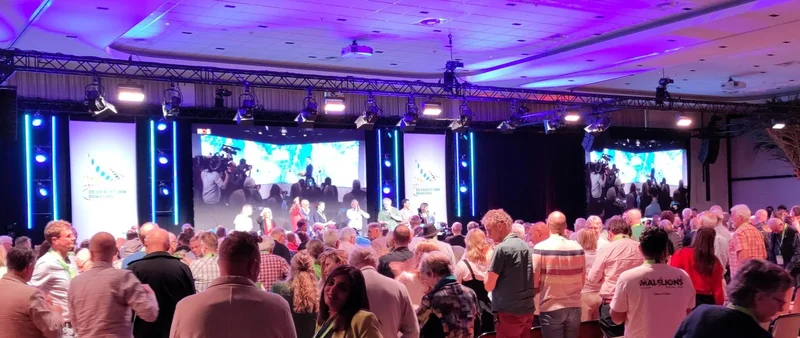
FNV Congress takes place once every four years. More than 600 union representatives from across FNV's sectors and networks have the opportunity to submit amendments to the congress document in advance. This document forms the basis for FNV's multi-year policy plan for the next four years.
The previous process was as follows: a sector delegation sent an amendment by email. The FNV team manually checked whether the person was authorised to submit it, then added the proposal to an Excel spreadsheet. Other delegations sent similar proposals or submitted counter-amendments to the same text. As a result, multiple emails arrived with overlapping proposals and conflicting amendments. Creating a clear overview of what was actually being proposed, and which paragraph each proposal concerned, was time-consuming and complex.
Some delegations did not have a complete overview of what they had proposed collectively.
The problem was that, at scale, the submission process was difficult to organise and oversee administratively.
The solution
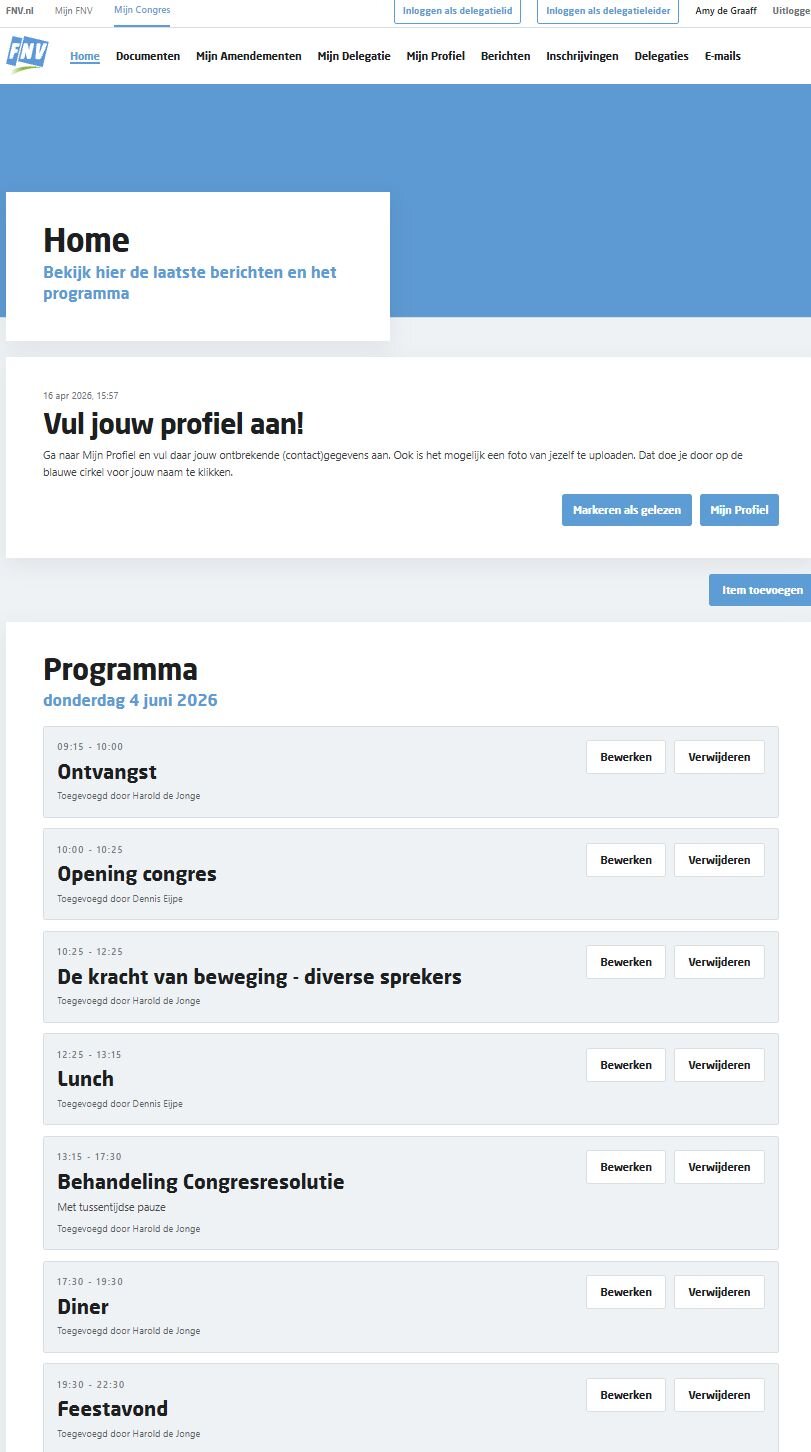
At FNV's request, Savvy built an event platform that reflects how an amendment actually moves through FNV's process.
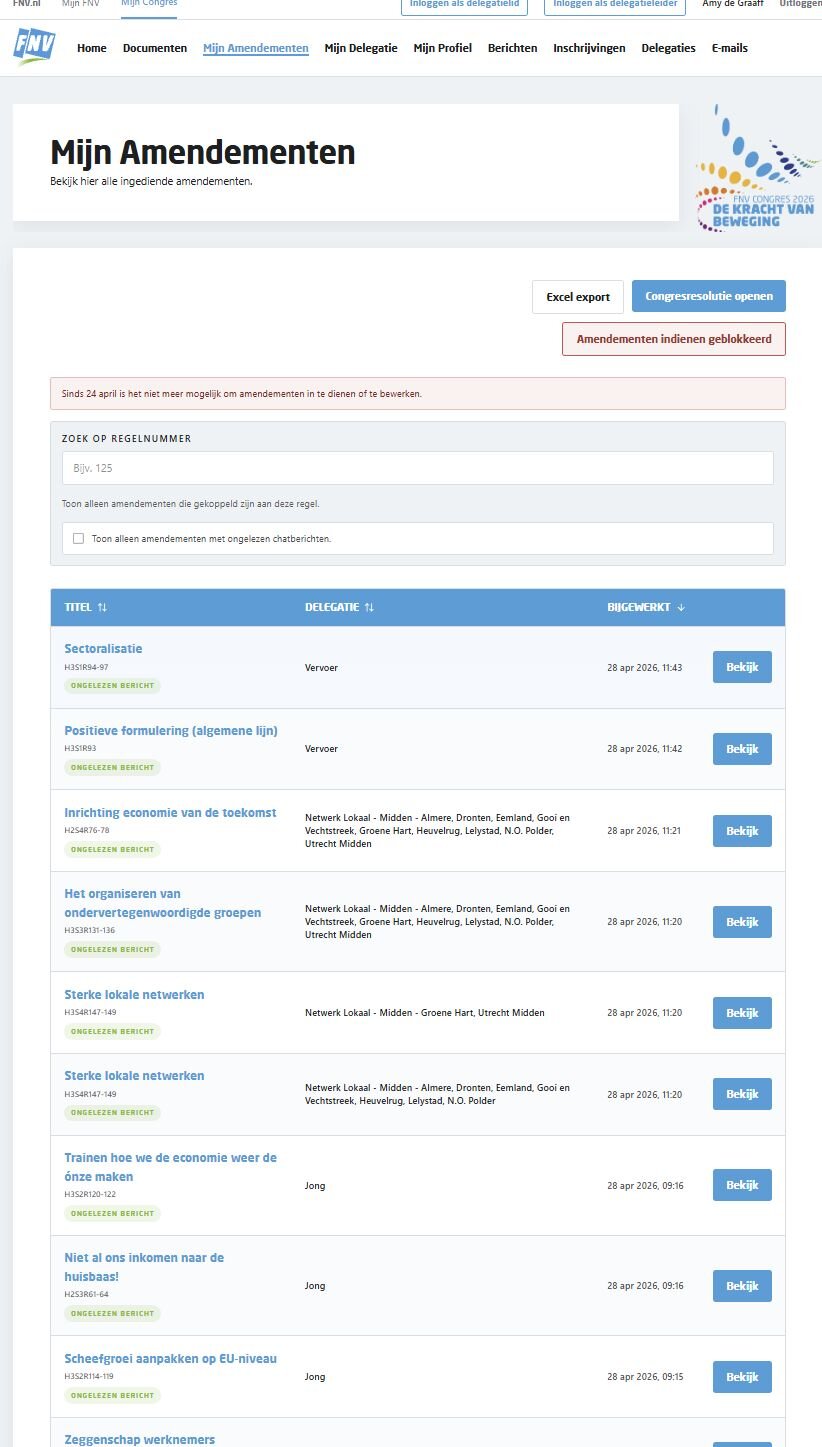
Registration and validation
A union member is invited to join a delegation on behalf of a sector or network/cadre group within FNV. The member completes a registration form. Approval is only granted after the FNV delegation coordinator checks their FNV membership and affiliation with the correct sector, network or cadre. Each delegation also has one person authorised to submit amendments. Only after manual approval does the member gain access to the congress platform.
This controlled validation is important because congress decisions are binding. Allowing unauthorised participants creates legitimacy problems. If someone were to challenge a vote later, FNV would need to demonstrate that only authorised members had participated.
The member submits an amendment
Congress participants can access the documents in the platform. They select the specific passages they want to change, write their proposed text and explain why. The system automatically identifies the relevant paragraph. Other members within the delegation see the proposal immediately.
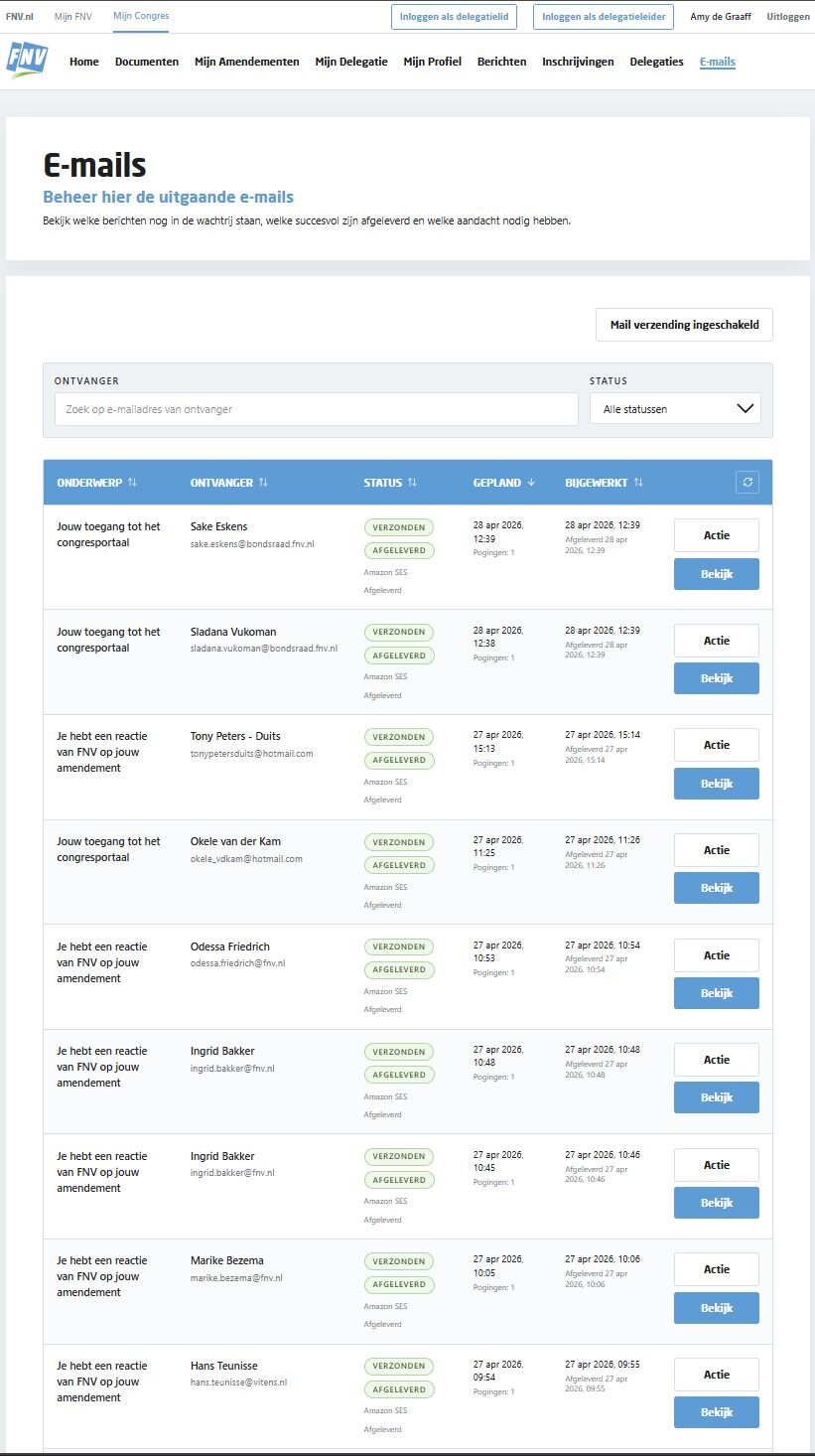
This internal transparency serves two purposes: it prevents duplicate work, such as three people proposing the same change, and enables the delegation to align its position before submitting it. Members can discuss, refine and strengthen proposals within their own delegation. Other delegations cannot see these proposals. This prevents reactive amendments: proposals submitted not on the basis of their content, but in response to what another delegation has proposed. By keeping amendments between groups private until review, the focus remains on content. The designated FNV contact responsible for collecting all amendments could communicate directly with submitters through the platform whenever questions arose or a proposal needed to be adjusted.
The FNV organising team reviews everything
Each amendment is automatically grouped by paragraph. If five delegations propose changes to section 3.2, all five proposals appear together. Conflicting amendments are immediately visible.
This overview is important because potential conflicts need to be identified before Congress. Without it, it might only become clear shortly before Congress that two popular proposals could not both be accepted.
The congress
By then, the document had already been updated with the accepted amendments. Delegations knew what their group had proposed and which amendments had been accepted. Every proposal was fully traceable: who submitted it, when, which delegation they represented and the reasoning behind it.
Speaking time was also organised as part of the preparation. Participants requested speaking time in advance for specific parts of the congress document, linked directly to the paragraph they wanted to address. They explained why, so other participants could see who would speak about what and why. This prevented duplicate arguments and gave delegations time to sharpen their position. During the congress, they could withdraw their request if a colleague had already made their point.
The congress chairs had a real-time overview on their tablets for each agenda item: how many speakers were registered, who they were and what they wanted to address. This allowed them to guide the discussion without being surprised by a sudden stream of requests.
In short, the Savvy congress platform provided:
- Controlled registration and validation of participants
- Amendment submission with paragraph tagging
- Internal transparency within delegations
- Privacy between delegations until review
- Direct communication between the FNV coordinator and submitters
- Automatic grouping by paragraph
- Complete traceability of all proposals
- Structured speaking-time requests linked to policy sections, with speaking-time management
- Participants could see what speakers wanted to address and why
- Real-time chair dashboard for each agenda item
- Clear facilities and logistics dashboard for organisers
The results
The FNV Congress was a success: the platform provided control from day one instead of leaving everything to be organised at the end.
- 400+ amendments processed in a fully structured workflow
- 15+ delegations worked independently with internal transparency
- Zero unauthorized submissions reached the organising team
- Complete traceability of every proposal, timestamp and reasoning
- Congress began with clarity instead of administrative cleanup
- Delegations could focus on their priorities without distraction from what other groups had proposed
- Speaking time was an organised part of the preparation, not an ad hoc request
- Chairs had a real-time overview for each agenda item showing how many speakers were registered, who they were and what they wanted to address
- No duplicate arguments or surprising last-minute speaking requests
Why it matters
Democratic governance at scale requires more than good intentions. It requires structure that matches how decisions are actually made. The FNV Congress is not a brainstorming session. It is binding policy formation. Amendments are not suggestions. They are formal proposals that shape FNV's policy for four years.
This process is wide-ranging and complex; it cannot rely on email and spreadsheets. It requires controlled access, transparency within groups, privacy between groups and complete oversight for organisers. Savvy built that structure, not as a collaboration tool, but as the digital backbone of the congress. The FNV Congress was democratic, transparent and manageable, as it should be.
Make democratic processes at scale manageable
Platforms that provide controlled participation, transparency and complete oversight for organisers in binding decision-making.